
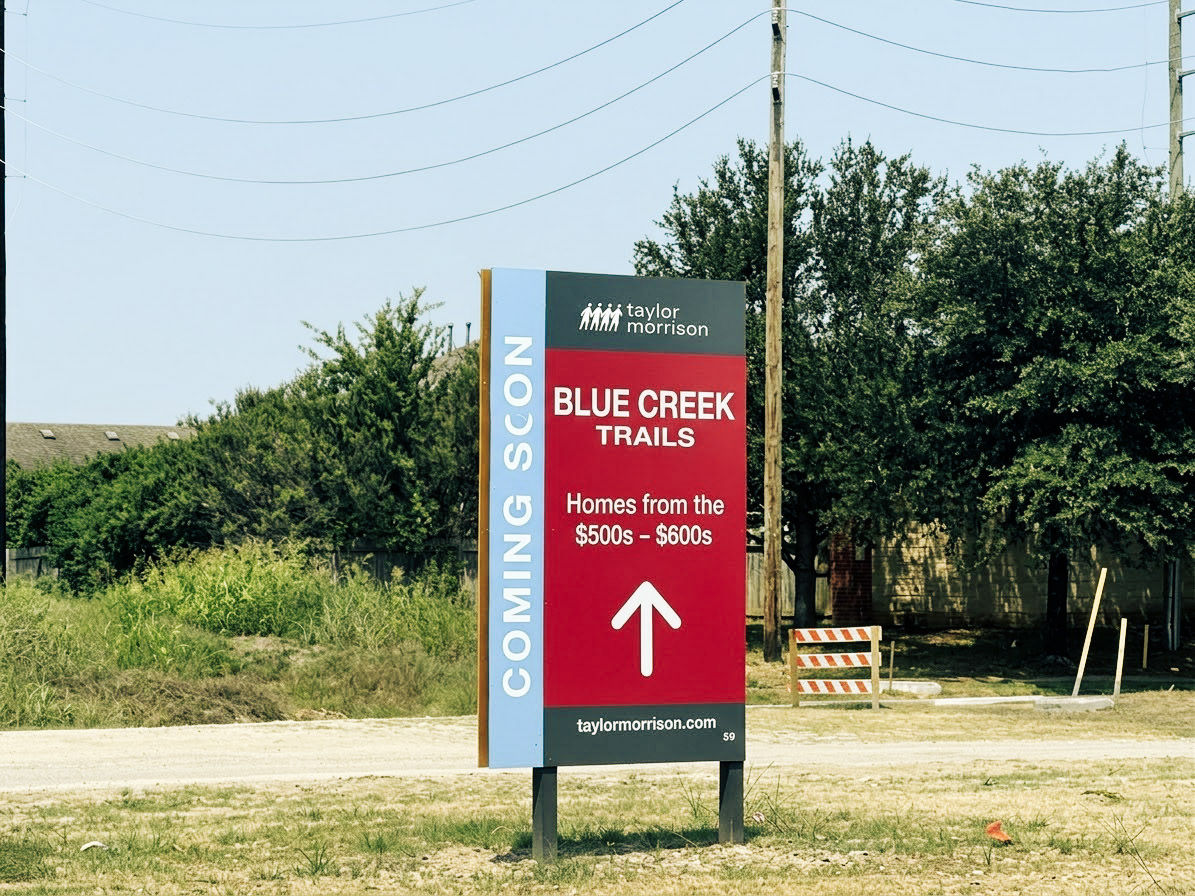
New Construction or Top Schools — Houston Families Are Finding Out You Usually Have to Pick One
By Crystal Plummer Spruill | TheHoustonReloGuide.com Last Updated: August 2026
The Quick Version
New construction gives you a new home. It does not automatically give you a ranked school, completed amenities, or protection from infrastructure that was always planned but never disclosed at the sales table.
Established communities give you something new construction genuinely cannot — a track record. The school has been open long enough to have a TEA rating, a Niche grade, years of STAAR data, and real parent reviews. You know exactly where that campus lands before you sign anything. What established communities don’t give you is the floor plan, the builder warranty, or the price point that new construction often delivers.
Most Houston families don’t realize they’re choosing between these two things until they’re already under contract.
This is the guide that helps you choose before that happens.
You walked into the model home and it stopped you cold.
The ceilings. The island. The way the light came through the back windows. You looked at your partner and you both knew — this is it.
Then you asked about the schools.
The sales rep smiled and said the community is zoned to one of Houston’s top school districts. And you nodded because you’d heard the name and it sounded right.
What they didn’t tell you — what almost nobody tells you — is that being zoned to a highly rated district and being assigned to a highly rated campus are two completely different things. And in Houston’s fastest-growing new construction corridors, those two things are drifting further apart every year.
This is not a reason to avoid new construction. It’s a reason to go in with your eyes open.
The School Truth Nobody Puts in the Brochure
Here’s how it actually works in Houston’s master-planned communities.
When a developer builds a new community, the homes come first. Schools, grocery stores, commercial buildings, and community infrastructure come after — sometimes years after. The developer needs buyers in homes generating HOA fees and tax revenue before the surrounding infrastructure can be built to support them.
So when you buy in a new community, you may be buying into a district — but the specific campus your child will attend might not exist yet. Or it might have opened recently with no performance data at all.
How long before a new school gets rated?
The Texas Education Agency releases A-F accountability ratings annually. But a brand new campus needs at least one full year of STAAR test data before TEA can rate it. In practice, a school that opens in August typically receives its first TEA accountability rating approximately two years later. The 2026 TEA ratings — released August 14, 2026 — rated over 9,000 campuses across Texas. Brand new campuses aren’t among them yet.
That means when you buy into a new community and your child attends a newly opened campus, you are making a decision based on the district’s reputation — not that specific school’s performance. Those are two different things. Being in a top-rated district does not guarantee your child’s specific campus is top-rated.
What about the ranking sites families actually use?
Most relocating families research schools on four platforms — Niche, GreatSchools, SchoolDigger, and Texas’s own TXschools.gov. Each pulls different data on different timelines and it’s worth understanding what you’re actually looking at.
TXschools.gov is the most authoritative source for Texas. It’s TEA’s official platform — search any campus or district by name or address, free, and updated with the latest A-F ratings. Start here.
GreatSchools pulls federal education data which typically lags one to two years behind the current school year. It’s the rating embedded in Zillow and Realtor.com listings — which means the school rating you see on a listing may not reflect current performance.
SchoolDigger is pure data — rankings based entirely on test scores with no review component. Clean and straightforward for data-oriented buyers.
Niche blends federal data with parent and student reviews. That review component is what takes the longest to develop for a new school. A campus with no graduates yet has no college enrollment data. A campus that opened last year has almost no parent reviews. A meaningful Niche ranking takes approximately three to four years to develop for a new campus. Earning a Niche A rating takes four to five years of sustained strong performance. If you’re looking up a school on Niche and the page shows limited data or no grade — that’s information. It means the school is too new to have a track record.
What to do instead:
Look at the district rating as your starting point — not your ending point. Ask your agent and the builder’s sales representative: which specific campus will my address be assigned to? When did that campus open? Does it have a TEA rating yet? What is the timeline for the next boundary change?
Verify the specific campus for your address using the district’s official address lookup tool before you sign anything. Do not rely on builder marketing materials, Zillow, or any listing platform to confirm your school zone. Those sources are frequently outdated.
[See our complete guide to TEA ratings and what they mean for Houston homebuyers →]
The District Is Not the Campus — And the Campus Can Change
In fast-growing Houston school districts, boundaries change regularly as new campuses open and enrollment grows. What that means for you: the school your address is zoned to today may not be the school your child attends in three years.
And here’s what most buyers don’t consider — rezoning doesn’t only happen to buyers in brand new communities. Established homeowners in high-growth districts have been rezoned after seven to ten years of ownership as surrounding development changes enrollment patterns. If your community sits near a boundary line — or near active development bringing new residents into the corridor — your child’s campus assignment can change even if nothing changed about your neighborhood specifically.
It’s responsible district management. But buyers need to understand it going in.
Ask your agent where the nearest attendance boundary sits relative to any home you’re seriously considering. Check the district’s boundary modification history for that area. If the community sits geographically between two schools that’s worth noting before you fall in love with a floor plan.
The same complexity applies within the same community. Two homes in the same master-planned community can be assigned to two completely different high schools depending on which section they sit in. The specific address is everything. Not the community name. Not the district name. The address.
[See our guide to school boundary changes in Houston’s high-growth districts →]
The Amenity Timeline Nobody Mentions
Master-planned communities are sold on their amenity packages. The resort-style pool. The lazy river. The trail system. The on-site restaurant. The fitness center. Those amenities are real — but they are not always ready when you move in.
New communities are built in phases. The amenities that attracted you to the brochure may be planned for a phase that doesn’t break ground until the community reaches a certain number of sold homes. If you buy in early phases you may be paying HOA fees on amenities you won’t have access to for two to three years. You may be living adjacent to active construction — noise, dust, heavy equipment — for years after you move in.
Ask before you sign: which amenities are open today, which are under construction, and what is the timeline for each phase? Get it in writing if you can.
There’s also a second amenity question worth asking: who else has access? Some Houston master-planned communities have attracted significant outside traffic to their amenity centers and waterparks. Families who chose a community partly for its resort-style amenities have found those amenities crowded with non-residents. Before you buy ask about the community’s guest policy. It’s a reasonable question and the answer matters to your quality of life.
What’s Being Built Around You — Not Just Inside the Community
When families research a new home they typically research the community. They rarely research the half-mile radius around it.
Houston has no zoning laws. What goes up next to an established neighborhood is largely determined by market forces, not neighborhood protection. Apartment complexes, build-to-rent communities, commercial developments, and infrastructure projects can all appear adjacent to single-family neighborhoods — sometimes years after the original homeowners moved in.
These developments affect you in real ways: increased traffic, construction noise, dust, nails in the road from work vehicles, changes to school attendance zones as enrollment shifts, and in some cases impacts to property values and quality of life.
Ask your agent what is currently under development or approved within a two-mile radius of any home you’re seriously considering. Is there undeveloped commercial land adjacent to the community? Are there any planned road expansions or utility corridors nearby? Have there been any recent eminent domain actions in the area?
These questions rarely get asked at the sales table. They’re some of the most important ones.
The Infrastructure Question — Always Check the Public Record
Eminent domain — the government’s constitutional authority to acquire property for public use — is exercised regularly in Houston’s growth corridors as infrastructure expands to support rapid development. Right-of-way corridors for future highways, toll roads, and utility lines are recorded in public transportation plans well before construction begins.
Buyers who don’t check the public record before purchasing can find themselves living adjacent to infrastructure projects they never anticipated — projects that were always planned, always public, just never mentioned at the sales table.
This applies to new construction and resale equally. But in new construction corridors — where development is building out into previously undeveloped land — the likelihood of nearby infrastructure projects is significantly higher.
Proposed large-scale infrastructure projects can affect established communities too. The proposed Texas Central high-speed rail line between Dallas and Houston — a 240-mile route currently in planning — cuts through 11 counties including Montgomery and Waller counties, both part of the greater Houston suburban market. Buyers in communities along that corridor should research the proposed alignment before purchasing. Texas Central publishes an interactive alignment map at texascentral.com/alignment-maps where you can see how the proposed route relates to specific areas.
Before you buy anywhere in Houston’s growth corridors: research the county’s long-range transportation plan. TxDOT project listings are public. County toll road authority projects are public. A few hours of research before you sign could save you from years of regret.
[See our guide to eminent domain and what Houston homebuyers need to know →] [See our full guide to the Texas Central Railway and what it means for Houston area homebuyers →]
Distance — The Cost Nobody Calculates
Most of Houston’s active new construction is being built further from the city core than it used to be. The corridors where builders are most active right now are there because that’s where the available land is — and that land is further out than it used to be.
That distance has a cost that rarely shows up in the purchase price.
Toll road costs can add hundreds of dollars per month per vehicle depending on your commute frequency. And the commute time — not the Google Maps estimate, the actual rush hour reality — is something every buyer should experience before they commit to a floor plan.
There are exceptions. Some areas within Houston proper are experiencing reinvestment and new construction — neighborhoods inside the loop are seeing new development that puts buyers closer to the city core at accessible price points. These opportunities are worth knowing about if proximity matters to your family.
But for the majority of Houston new construction, the honest question is: have you driven this route at rush hour? Not looked at the map. Driven it.
The Case For New Construction — Because There Is One
None of what’s above is an argument against new construction. It’s an argument for going in informed. And when you go in informed, there’s a genuinely strong case to be made.
You choose your finishes. Countertops, flooring, fixtures, paint — within a builder’s offerings you have options that resale simply can’t give you. The home starts as yours.
You get a warranty. Most Texas production builders offer a 1-2-10 warranty: one year of coverage for workmanship and materials, two years for major systems including HVAC, plumbing, and electrical, and ten years for structural components. Some builders have shortened structural coverage in recent years. Ask for the warranty terms in writing at contract signing. Don’t assume.
Everything is new. The roof, the appliances, the HVAC, the water heater — you’re not inheriting anyone else’s deferred maintenance.
Builder incentives in a slow market. When builders have inventory to move, they negotiate. Rate buydowns, closing cost contributions, and upgraded finishes are all on the table.
New communities eventually establish. The school that opens today without a TEA rating has district infrastructure, professional educators, and community investment behind it. In five to seven years that campus will have a track record. If your children are young buying into a new community means growing alongside it.
The Case For Established Resale — Because There’s One of Those Too
Established communities have something new construction can’t sell you: proof.
The school has been there for twenty years. It has a TEA rating. It has a Niche grade based on years of actual performance data. The athletic programs are built. The feeder pattern is known. You know exactly where that campus lands before you sign anything.
The infrastructure is complete. The grocery store is open. The trails are finished. The amenity center is fully operational. You move in on day one and the community works.
The trees are mature. This sounds like a quality of life detail — and it is. But it’s also a practical reality for many families in ways that go beyond aesthetics. Natural shade, canopy coverage, and the visual character of mature landscaping matter in ways that are hard to quantify until you’re living in a neighborhood without them. A fifteen-year-old live oak in a backyard provides shade, privacy, and character that no new construction landscaping budget can replicate. In Houston’s heat, mature tree canopy is not a luxury — it’s a meaningful quality of life factor. New construction communities typically plant young trees at closing. They take years — sometimes decades — to provide meaningful shade and coverage. If mature landscaping matters to your family for any reason, established communities have a real and lasting advantage.
The property tax picture is more predictable. MUD rates on established communities have often declined as infrastructure debt is paid down. In newer communities MUD rates can be at their peak when you buy.
Resale homes can have warranty protection too. Third-party home warranties are available from several providers active in Texas — Home Warranty of America, American Home Shield, and First American Home Warranty among them. Most Texas plans run $350 to $600 per year plus a service fee per claim. For a resale home with aging systems the coverage is worth the cost.
The Questions to Ask Before You Decide
For new construction:
- What specific campus will my address be assigned to and does it have a TEA rating?
- When did that campus open and when is the next scheduled boundary change?
- Which amenities are open today and what is the timeline for each remaining phase?
- Who has access to the amenities — residents only or open to the public?
- What is currently being developed or approved within two miles of this property?
- Are there any planned road expansions, utility corridors, or infrastructure projects nearby?
- Have I checked the Texas Central Railway alignment map for this area?
- What are the full warranty terms in writing?
- What is the MUD tax rate and how long has it been at that level?
- Have I driven this commute at rush hour?
For resale:
- What is the TEA rating for the specific campus my address is zoned to?
- Where does the nearest attendance boundary sit relative to this address?
- Has this corridor seen recent boundary modifications?
- When were the major systems last replaced — HVAC, water heater, roof?
- Is a third-party home warranty available?
- Has this property ever flooded?
- What is the MUD tax rate and is it trending up or down?
- What is being developed nearby and is there any proposed infrastructure in the area?
- Have I checked the Texas Central Railway alignment map if buying in Montgomery or Waller County?
How Crystal Thinks About This
Every family’s situation is different. A family with a toddler has time for a new community’s schools to establish. A family with a rising eighth-grader needs a high school with a track record right now. Those are two completely different decisions.
What I do before any conversation about new construction versus resale is understand the timeline of your family. How old are your kids? How long do you plan to stay? What is your commute reality — and have you actually driven it? What matters most to you in a school? Are there specific lifestyle or accessibility needs that make the character of an established community — mature trees, complete infrastructure, walkable amenities — more important than a new floor plan?
Those answers determine which side of this decision makes sense. Not the floor plan. Not the model home kitchen.
You don’t have to figure out those questions before you call me. That’s what the conversation is for.
Book a Free Family Assessment →
Or start with the Houston Neighborhood Navigator — answer five questions and get your top three suburb matches based on your employer corridor, your family’s priorities, and the current market.
[Find Your Suburb →]
Dive Deeper — Related Guides
[How TEA A-F School Ratings Work — And What They Mean for Houston Homebuyers →] [School Boundary Changes in Houston’s High-Growth Districts — What Every Buyer Needs to Know →] [Eminent Domain and Houston Homebuyers — What to Check Before You Sign →] [The Texas Central Railway Route — What Houston Area Buyers Need to Know →] [Builder Warranties in Texas — What You’re Actually Getting →]
Frequently Asked Questions
Is new construction a good investment in Houston right now? It depends on the corridor and the builder. In active growth areas with strong employer bases new construction in established master-planned communities has historically held value. The distance factor and the school timeline are the two variables most buyers underestimate.
How long does it take for a new Texas school to get a TEA rating? Approximately two years after opening. A new campus needs at least one full year of STAAR test data before TEA can generate an accountability rating. The 2026 TEA ratings released August 14, 2026 rated over 9,000 campuses. Brand new campuses that opened in 2025 or 2026 are not yet rated.
How long does it take for a new school to get a Niche ranking? Approximately three to four years for a meaningful ranking to develop — and four to five years of sustained strong performance to earn a Niche A rating. If a school page on Niche shows limited data or no grade the school is too new to have a track record. Use TXschools.gov and the district rating instead.
Where should I look up Texas school ratings? Start with TXschools.gov — TEA’s official platform, free, and the most authoritative source for Texas. Then check Niche for parent reviews once a campus has been open long enough to have meaningful data. GreatSchools pulls federal data that lags one to two years. SchoolDigger is purely test score based. Always verify the specific campus for your address directly with the district.
Can I be rezoned out of a school after I buy? Yes. Rezoning happens in high-growth districts when enrollment patterns shift. It doesn’t only happen to buyers in brand new communities. Established homeowners have been reassigned to different campuses through routine boundary modifications. Ask your agent where the nearest attendance boundary sits relative to any home you’re considering.
What is the Texas Central Railway and should it affect where I buy? Texas Central is a private company proposing a 240-mile high-speed rail line between Dallas and Houston. The proposed route cuts through 11 counties including Montgomery and Waller counties. If you’re considering a home in those corridors, check the proposed alignment at texascentral.com/alignment-maps before you buy. The project is still in planning — but right-of-way acquisitions are public record and worth reviewing. We cover this in detail in our [Texas Central Railway guide →].
Do resale homes come with a warranty? Not automatically — but third-party home warranties are available. Home Warranty of America, American Home Shield, and First American Home Warranty are among the providers active in Texas. Most plans run $350 to $600 per year plus a service fee per claim. Read the exclusions carefully before signing.
What is a builder warranty on new construction in Texas? Most Texas production builders offer a 1-2-10 warranty: one year for workmanship and materials, two years for major systems, and ten years for structural components. Some builders have shortened structural coverage in recent years. Always ask for the terms in writing at contract signing.
Why do mature trees matter when buying a home in Houston? More than most buyers expect. Mature trees provide meaningful shade in Houston’s climate, natural privacy, and established character that takes decades to develop. For some families mature landscaping is a genuine accessibility and quality of life need — not just a preference. New construction communities plant young trees at closing that take years to provide meaningful canopy. If mature landscaping matters to your family for any reason, established communities have a lasting advantage.
Should I buy new construction or resale in Houston? It depends on your family’s specific timeline, school needs, commute reality, and financial picture. The right answer is the one that fits your family’s actual situation — not the one with the better kitchen. Book a free Relo Connect → to map it out together.
Crystal Plummer Spruill is a licensed Texas REALTOR® brokered by Real Broker LLC (TREC #0688471) and the founder of Moraea Co. and TheHoustonReloGuide.com. She has spent years embedded in the Katy and Houston community — as an agent, as a community leader, and as someone who will tell you the truth about where to live even when the truth is complicated.