
Houston’s Most Popular Suburbs for Relocating Families — And What Nobody Tells You About Each One
The Quick Version
Not everyone has time to read 3,000 words before a Tuesday night family meeting. Here’s the one-sentence version for each suburb — then read the full section for the one that jumps out at you.
- The Woodlands: The north Houston gold standard — established, forested, and anchored by ExxonMobil. Best for I-45 north commuters and IAH-adjacent families.
- Katy: The most well-known Houston family suburb for a reason — right off I-10, strong schools, established reputation. Best for Energy Corridor employees.
- Sugar Land: Underrated, diverse, genuinely beautiful — the suburb with an actual town square. Best for Highway 59 and Medical Center commuters.
- Cypress/CyFair: Home to Bridgeland, one of the country’s top master-planned communities — but the school boundary situation is more complicated than the brochure says.
- Pearland: South Houston’s answer for Medical Center employees who need space without paying inner loop prices. Spans three counties — which matters more than most people realize.
- Friendswood: The most overlooked suburb on this list. Elite schools, established community, and almost nobody is marketing it to relocating families.
- League City: The NASA corridor suburb — for aerospace families who want water access and strong schools on the southeast side.
- Fulshear: The newest construction in west Houston. Far from everything, worth it if you’ve done the commute math.
You Googled “best Houston suburbs” and got a list. Probably the same list every other website gave you. Katy. Sugar Land. The Woodlands. Maybe Pearland. A paragraph about schools and a paragraph about commutes and a stock photo of a cul-de-sac.
That’s not this.
But before we get into the suburbs: if you’re still trying to decide whether Houston itself makes sense for your family, start with Should You Move to Houston?. We walk through the bigger decision first — jobs, cost of living, housing costs, schools, transportation, weather, healthcare and the trade-offs that come with living here.
This is what I’d tell you over coffee if you called me and said “we’re moving to Houston and we have no idea where to start.” It’s the unfiltered version — the one that includes the things the brochures leave out, the trade-offs nobody talks about, and the suburbs most people overlook entirely.
Houston is enormous. The school districts don’t follow city lines. They don’t follow community lines. They don’t follow zip codes. You can live in the city of Katy and be zoned to a school outside Katy ISD. You can live in a neighborhood that markets itself as Cypress and attend a school in a district you’ve never heard of. Property taxes vary by community, not just by county — and sometimes moving two blocks in the right direction saves you thousands of dollars a year. None of this shows up on Zillow.
So let’s actually talk about it.
Before You Pick a Suburb — Three Things Houston Will Not Tell You
One. School district boundaries don’t follow city lines, community lines, or zip codes — anywhere in Houston.
This applies to every suburb on this list. The only thing that determines your child’s school is the specific address you buy. Not the city. Not the master-planned community name. Not the zip code. Before you make an offer on any home in the Houston area, look up that specific address in the school district’s official boundary tool. Do not rely on Zillow, Redfin, or any real estate listing to verify school zoning — these databases are frequently outdated. Verify directly with the district before you make an offer. We cover exactly how to do this in our guide to Houston school districts — what the rankings don’t tell you.
Two. Property taxes vary by community, not just by county.
Texas has no state income tax, and you will pay for that in property taxes. But the variation is more granular than most people expect. Many Houston neighborhoods sit inside Municipal Utility Districts — MUDs — which add their own tax rate on top of the base county rate. Some MUDs add $0.50 or more per $100 of assessed value. On a $500,000 home, that’s $2,500 a year on top of what you already expected to pay. Two homes that look identical on a listing can have dramatically different actual carrying costs depending on which side of a MUD boundary they sit on. We break this down fully in our [complete guide to MUD taxes and what they’re actually costing you].
Three. The commute math is different in Houston than anywhere else you’ve lived.
Google Maps will show you a distance. It will not show you what I-10 looks like at 7:45 AM, what the Westpark Tollway costs in monthly tolls, or what an extra 45 minutes each way adds up to across a school year. Map the commute to both workplaces at peak hours before you fall in love with any community. We break down the real numbers in our [Houston commute reality check].
Now. The suburbs.
The Woodlands — The North Houston Gold Standard
One sentence: Established, forested, incorporated city with one of the strongest master-planned community identities in the country — and a commuter corridor anchored by ExxonMobil.
Primary employer corridor: ExxonMobil campus (Spring/The Woodlands), Halliburton (North Sam Houston Parkway/Beltway 8), George Bush Intercontinental Airport corridor, corporate and medical offices along I-45 North
Who ends up here: ExxonMobil employees and affiliates, Halliburton families, frequent international travelers who need IAH proximity, executives who want established prestige and green space
The Woodlands is one of the most well-known master-planned communities in the entire country — and it has earned that. It is also an incorporated city, which gives it a level of municipal services, governance, and community identity that most Houston suburbs lack. The tree canopy is real. The community was intentionally built around the existing forest, giving it a feel that is genuinely different from the rest of Houston’s suburbs. More traditional architecture. More green space. A slower, more established suburban pace.
ExxonMobil’s global campus sits just south of The Woodlands in Spring — a 385-acre facility housing approximately 10,000 employees that permanently reshaped the real estate market in this corridor when it opened in 2014. If your relocation is connected to ExxonMobil or any of its affiliates, The Woodlands will be on your list by default. Halliburton’s major North Belt facility on the North Sam Houston Parkway is also accessible from this corridor for families who can navigate the Beltway commute.
For families where one or both partners travel internationally, proximity to George Bush Intercontinental Airport is a real lifestyle advantage. The Woodlands, Spring, and Conroe are all within a reasonable drive of IAH — a meaningful quality-of-life factor that rarely shows up in suburb rankings.
What the brochure doesn’t tell you: The Woodlands has a country feel. Not rural — it has every amenity you’d want — but the suburban integration and modern home styles that you’d find in newer Katy or Fulshear communities aren’t quite the same here. New construction within The Woodlands itself is very limited. Families who want The Woodlands lifestyle but can’t make the price point work tend to land in Conroe or Spring — both are just north, more affordable, and still in the same IAH-adjacent corridor.
Woodlands ISD is well-regarded with strong academics and established programs across all levels.
Best for: ExxonMobil and north corridor energy employees, Halliburton families, frequent international travelers, families who prioritize green space and established community prestige over newer construction.
Common questions about The Woodlands
Is The Woodlands a city or a community? Both. The Woodlands is an incorporated city in Montgomery County, Texas. It was developed as a master-planned community and later incorporated, giving it its own municipal government and services.
Is The Woodlands worth the price premium? For families whose employers are in the north corridor — particularly ExxonMobil — the commute math often justifies the premium. For Energy Corridor employees on the west side, calculate the daily cross-town drive before committing.
Katy — The Name Everyone Knows For a Reason
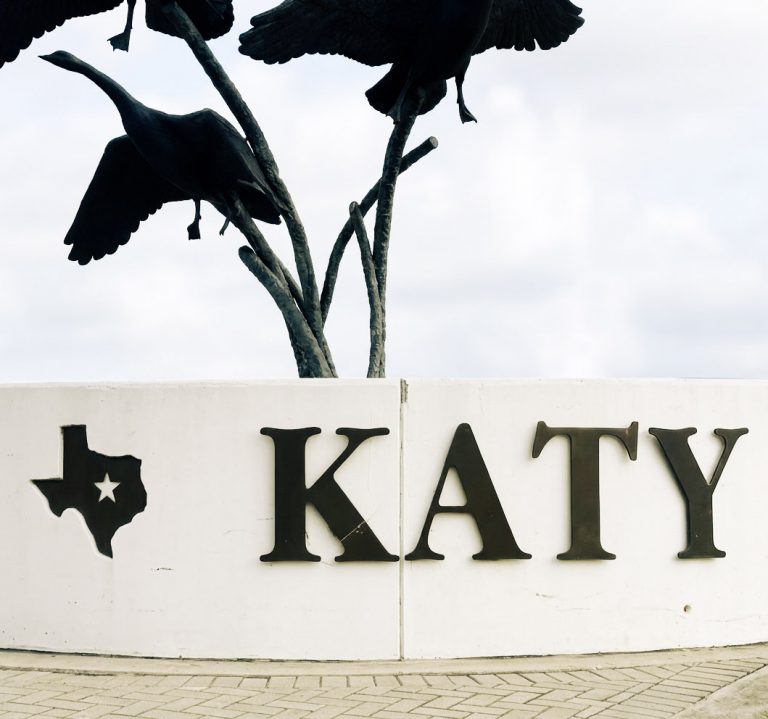
One sentence: Houston’s most recognized family suburb — established communities, competitive schools, and right off I-10 for Energy Corridor and west Houston commuters.
Primary employer corridor: Energy Corridor (BP, ConocoPhillips, Shell, Wood Group, and dozens of energy and engineering firms along I-10 West), Memorial and Spring Branch area employers inside the Beltway, West Houston medical campuses, Grand Parkway corporate parks
Who ends up here: Energy Corridor employees, Memorial and west Houston professionals who want more space, families relocating from out of state who did their research, anyone who values I-10 access to both downtown and the Energy Corridor
Katy has a reputation that precedes it — and that reputation is earned. It is one of the most recognized family-friendly communities in the Houston area, period. The I-10 access is real and meaningful. If your commute is to the Energy Corridor, Katy puts you right there. But Katy also works well for families with employers inside the Beltway — Memorial, Spring Branch, and west Houston — who want more space than inner loop living provides without feeling like they’ve left the city entirely.
Katy sits at the tripoint of Harris, Fort Bend, and Waller counties. Most of Greater Katy falls in Harris and Fort Bend counties, with a smaller portion in Waller County to the west. As with every Houston suburb, the county your specific address falls in affects your property tax rate — worth verifying before you make an offer.
Katy ISD consistently ranks among the top school districts in Texas. The high schools — Katy, Tompkins, Jordan, Seven Lakes, and others — are genuinely competitive programs. Which is worth understanding clearly: competitive is a two-sided word. The academics are excellent. The athletic programs run deep. If your child is a serious athlete, they will face real competition for starting positions. The talent pool is significant in ways that matter when a teenager is trying to earn playing time or a scholarship.
What the brochure doesn’t tell you: Katy’s established communities — Cinco Ranch, Seven Lakes, the older Katy neighborhoods — offer resale homes on generally larger lots than comparable Cypress communities. But there is no new construction in those established areas. If you want a new home and Katy ISD, you’re looking at communities further west: Elyson, Cane Island, Jordan Ranch, Sunterra, and others. These are beautiful communities still in Katy ISD — but the schools serving them are newer, without the decades of program-building that Seven Lakes or Tompkins carries. You can have a Katy ISD address without the Katy ISD reputation. That distinction matters, and we break it down fully in our [guide to new construction vs. established schools in Houston’s suburbs].
Best for: Energy Corridor commuters, Memorial and west Houston professionals who want suburban space, families who want established community reputation, buyers who want competitive academics and understand the environment that comes with it.
Common questions about Katy TX
Is Katy TX good for families? Consistently one of the top family suburbs in Texas. Strong schools, established communities, and excellent I-10 access make it a reliable choice — particularly for Energy Corridor and west Houston employees.
What county is Katy TX in? Katy sits at the tripoint of Harris, Fort Bend, and Waller counties. Most of Greater Katy falls within Harris and Fort Bend counties, with a smaller portion in Waller County. The county your specific address falls in affects your property tax rate.
Can you get new construction in Katy ISD? Yes — but not in the established neighborhoods like Cinco Ranch or Seven Lakes. New construction in Katy ISD is primarily in newer communities further west along the Grand Parkway, including Elyson, Cane Island, and Jordan Ranch. The schools serving those communities are newer and still building their programs.
Sugar Land — The Suburb That Surprises People
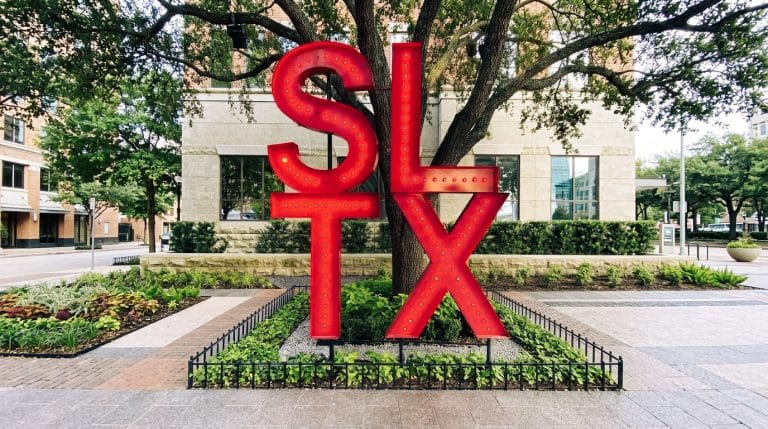
One sentence: An established, genuinely diverse suburb with an actual town square, a strong employer base, and one of the best school districts in Texas.
Primary employer corridor: SLB (formerly Schlumberger), Houston Methodist Sugar Land Hospital, Memorial Hermann Sugar Land, ChampionX, Sysco, Baker Hughes, Minute Maid, CVR Energy — plus Highway 59 access to the Texas Medical Center and downtown Houston
Who ends up here: Fort Bend County professionals, Medical Center and downtown commuters on the southwest side, families who want established community character and genuine diversity
Sugar Land is one of the most consistently underrated suburbs in the Houston area. It has everything — a genuine town square, one of the best park systems in the region, a diverse and international community, and the kind of established feel that takes decades to build.
Sugar Land Town Square is real and worth understanding. Located at the intersection of Highway 59 and Highway 6, it includes Sugar Land City Hall, Minute Maid’s Houston-area headquarters, CVR Energy, a Marriott hotel, condominiums, restaurants, and retail — all organized around a walkable pedestrian plaza. This kind of genuine town center is rare in Houston’s suburbs.
The pecan trees are real too. The older established neighborhoods carry massive mature pecan trees lining the streets — the kind of canopy that takes generations to grow and gives the community a completely different visual character from newer developments.
The employer base is significant. SLB, Houston Methodist Sugar Land Hospital, Memorial Hermann Sugar Land, ChampionX, Sysco, and Baker Hughes all have a presence in Fort Bend County. The financial services sector is also a major employer in this corridor. For families where the commute destination is along Highway 59 or into the Medical Center, Sugar Land’s position on the southwest side of Houston makes geographic sense in a way that Katy or The Woodlands simply does not.
Fort Bend ISD consistently ranks among the top school districts in Texas.
What the brochure doesn’t tell you: Sugar Land has one of the most genuinely diverse communities in the Houston suburbs. The restaurants alone will tell you this — within a few miles you’ll find exceptional Indian, Chinese, Vietnamese, Middle Eastern, and Pakistani cuisine alongside every American staple. The grocery stores stock international ingredients. The community reflects families from across the world who have made Fort Bend County home. For families coming from more diverse metropolitan areas who are wondering if they’ll find their people in the Houston suburbs — Sugar Land deserves a serious look.
The community is also expanding. New development along the Grand Parkway and into neighboring Richmond to the west is extending the Fort Bend ISD corridor with newer inventory at more accessible price points.
Best for: Highway 59 and Medical Center commuters, Fort Bend County professionals, families who value genuine diversity and international community, buyers who want established character with a real town center.
Common questions about Sugar Land TX
Is Sugar Land a good place to raise a family? One of the best in Greater Houston. Fort Bend ISD is consistently top-ranked, the community is diverse and well-established, and the quality of life infrastructure — parks, town square, restaurants — is genuinely strong.
What are the major employers in Sugar Land TX? SLB, Houston Methodist Sugar Land Hospital, Memorial Hermann Sugar Land, ChampionX, Sysco, Baker Hughes, Minute Maid, and CVR Energy are among the largest. Fort Bend County also has a growing biotech and life sciences cluster tied to its proximity to the Texas Medical Center.
Cypress / CyFair — Bridgeland and What’s Coming Next
One sentence: Home to Bridgeland, one of the country’s top master-planned communities — and a corridor about to be significantly reshaped by the Houston Texans’ Toro District.
Primary employer corridor: Northwest Houston business corridor, Energy Corridor via Highway 290 and Beltway 8, and — beginning 2029 — Toro District, the Houston Texans’ new global headquarters and training complex
Who ends up here: Northwest Houston commuters, Bridgeland lifestyle buyers, families who want new construction in a master-planned setting, buyers positioned for long-term appreciation in a rapidly developing corridor
Cypress is a large geographic area covering multiple zip codes under the broader Cy-Fair ISD umbrella. The community most people are actually asking about when they say Cypress is Bridgeland — one of the top-selling master-planned communities in the entire country for several consecutive years. The lakes, the trails, the amenities — Bridgeland has earned its reputation as one of the premier master-planned destinations in the Houston area.
And something significant just happened in this corridor. In February 2026, the Houston Texans announced Toro District — an 83-acre mixed-use sports and entertainment destination being built within Bridgeland Central, the community’s emerging urban core just off the Grand Parkway at Peek Road. The Toro District will anchor the Texans’ new global headquarters and training complex — 175,000 square feet of football and business operations, an indoor fieldhouse, and three outdoor NFL practice fields — surrounded by retail, restaurants, hotels, medical office space, and entertainment venues. The team expects to move in by 2029. The project is projected to generate approximately $34 billion in long-term economic impact and more than 17,000 jobs in the region over time.
Full transparency on the Toro District: it is a public-private partnership involving Harris County, and there is an active community conversation about the use of taxpayer dollars. The county authorized a tax increment reinvestment zone to fund infrastructure improvements around the facility. Whether you see that as smart regional investment or a concern is a fair conversation — but it’s worth knowing before you buy in this corridor.
What the brochure doesn’t tell you: Cypress homes tend to sit on more compact lots than comparable Katy homes. For families coming from markets where lot size is a given, this is worth understanding upfront.
Like every Houston suburb, school boundaries here require careful verification. As a recent example of how quickly things can shift — some homes within Bridgeland itself have been redistricted to schools in Hockley as Cy-Fair ISD manages rapid enrollment growth. It’s a good reminder that being adjacent to a well-known community does not guarantee zoning to that community’s schools. Verify the specific campus for your address directly with Cy-Fair ISD before making an offer. Our [guide to Houston school districts] walks through exactly how to do this lookup correctly.
Best for: Northwest Houston commuters, Bridgeland lifestyle buyers, families positioned for long-term appreciation in the Toro District corridor, buyers who verify school boundaries before falling in love with a floor plan.
Common questions about Cypress TX
Is Bridgeland in Cypress TX a good place to live? Yes — Bridgeland is consistently one of the top-selling master-planned communities in the country with strong amenities, well-designed neighborhoods, and an emerging urban core anchored by the upcoming Toro District. As with any Houston suburb, school boundary verification is essential before buying.
What is Toro District in Cypress TX? Toro District is an 83-acre mixed-use sports and entertainment development announced in February 2026, located within Bridgeland Central off the Grand Parkway. It will serve as the Houston Texans’ new global headquarters and training facility, surrounded by retail, restaurants, hotels, and medical office space. Expected to open in 2029.
Pearland — The South Side’s Answer
One sentence: The go-to suburb for Medical Center employees and south Houston commuters — but Pearland spans three counties, which affects your taxes, your school district, and your insurance more than most buyers expect.
Primary employer corridor: Texas Medical Center (the largest medical complex in the world), Houston Methodist, Memorial Hermann, MD Anderson Cancer Center, Baylor St. Luke’s, CHI St. Luke’s, UT Health, University of Houston Clear Lake, NASA/Johnson Space Center, downtown Houston via Highway 288 and Beltway 8
Who ends up here: Medical Center researchers, surgeons, nurses, and administrators, inner loop professionals who need suburban space, south Houston commuters, NASA and Clear Lake corridor families
Pearland sits south of Houston, and that geography is its defining feature. For families where one or both parents work at the Texas Medical Center — the largest medical complex in the world, employing over 100,000 people — Pearland is frequently the answer that makes the most financial and logistical sense.
The commute math is real. A family in Katy driving to the Medical Center adds 45 to 60 minutes each way in peak traffic. A family in Pearland via Highway 288 might be 20 to 25 minutes out on a normal day. Over a work year that difference is hundreds of hours — time at dinner, at the soccer game, at the kitchen table. Time is not abstract.
Pearland has a genuine town square — Pearland Town Center — with retail, restaurants, and walkable commercial space. It’s a real community with established character, not just a bedroom suburb.
What the brochure doesn’t tell you: Pearland is not entirely in one county. The city spans three counties — primarily Brazoria County, with portions extending into Fort Bend and Harris counties. This matters in ways that directly affect your wallet.
The Brazoria County portions of Pearland sit inside Texas’s designated first-tier coastal windstorm territory. The boundary is a county line, not a distance from the Gulf — so a home in the Brazoria County part of Pearland is in the windstorm designated area even though open water is a long drive away. Texas state law does not require windstorm insurance. But if your home is in the designated territory, your mortgage lender will very likely require a separate windstorm policy as a condition of loan approval. The portions of Pearland in Harris and Fort Bend counties are not subject to the same requirement. Know which county your address falls in before you close.
School districts in Pearland are also more fragmented than the city name suggests. Depending on your specific address, you may be in Pearland ISD, Alvin ISD, Clear Creek ISD, Fort Bend ISD, or others. Verify the specific school district and campus for your address before making an offer.
Flooding is also a real conversation in parts of Pearland. Ask about flood history and flood insurance requirements for any home you consider in this corridor. This is non-negotiable due diligence south of Houston.
Best for: Medical Center employees and researchers, inner loop professionals who need suburban space, south Houston commuters, buyers who want suburban square footage at accessible price points without going west.
Common questions about Pearland TX
Is Pearland TX a good place to live? Yes — Pearland consistently ranks among the fastest-growing and most livable suburbs in Greater Houston. Strong schools, a real town center, and Medical Center proximity make it a compelling choice for south Houston commuters.
What county is Pearland TX in? Pearland spans three counties — primarily Brazoria County, with portions extending into Fort Bend and Harris counties. Which county your specific address falls in affects your property tax rate, school district, and windstorm insurance requirements. Verify before you buy.
Is windstorm insurance required in Pearland TX? Not by Texas state law — but if your home sits in the Brazoria County portion of Pearland, your mortgage lender will very likely require it as a condition of loan approval. Homes in the Harris County or Fort Bend County portions of Pearland are not in the same windstorm territory designation.
Friendswood — The One Most People Overlook
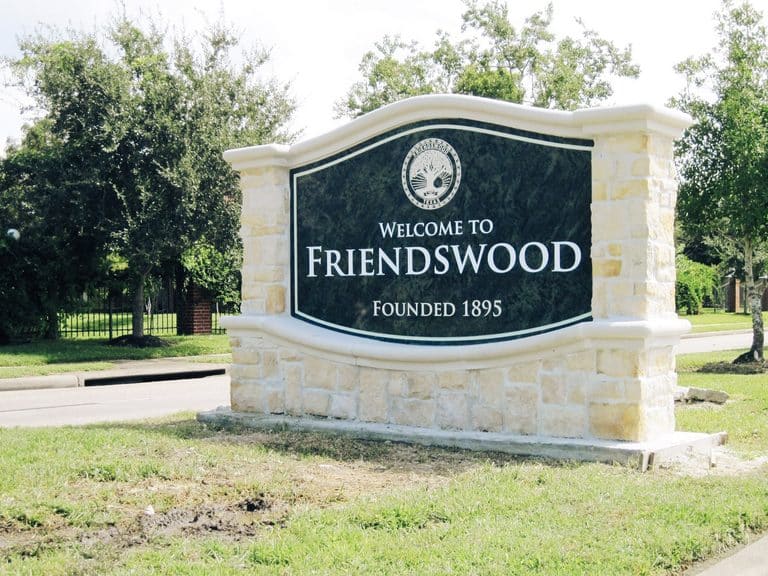
One sentence: Elite schools, established community, almost no one marketing it to relocating families — and a commute corridor that serves the Medical Center, NASA, and th e Clear Lake aerospace industry.
Primary employer corridor: Texas Medical Center, NASA/Johnson Space Center, Boeing, Lockheed Martin, Jacobs Engineering, Leidos, and dozens of Clear Lake aerospace and defense contractors, University of Houston Clear Lake, inner loop employers via I-45 South
Who ends up here: Families who did their research, Medical Center professionals, aerospace and defense employees, people who were told about it by someone who actually knows Houston
Friendswood doesn’t come up in the generic Houston suburb conversation. It has low search volume, minimal marketing to out-of-state families, and almost no presence in the relocation guides most people find online.
That is a mistake.
Friendswood ISD carries an A accountability rating from the Texas Education Agency. The four-year graduation rate is 98.9% — compared to a Texas state average of 90.3%. The average teacher in Friendswood ISD has 13.1 years of experience, compared to a state average of 11.1 years. These are not marginal differences. They are indicators of a district that has been building institutional excellence for decades and has the community investment to sustain it.
Friendswood High School has a long-held reputation for academic excellence — multiple generations of the same families have attended its schools. That kind of community continuity is rare in a fast-growing metro area, and it shows in the outcomes.
The commute corridor is the other underappreciated story. The Texas Medical Center, NASA/Johnson Space Center, and the Clear Lake aerospace and defense cluster — Boeing, Lockheed Martin, Jacobs Engineering, Leidos, and dozens of contractors — are all on the southeast side of Houston. For families whose employers are in that world, Friendswood puts you close to work and in genuinely elite schools at the same time.
What the brochure doesn’t tell you: Almost no one is marketing Friendswood to relocating families. The families who end up there found it the same way you’re finding it right now — someone told them the truth about the schools.
Best for: Medical Center employees, NASA and aerospace families, Clear Lake corridor workers, buyers where school quality is the primary decision driver, families who want established community credibility without paying The Woodlands prices.
Common questions about Friendswood TX
Is Friendswood TX a good place to live? Consistently one of the most underrated suburbs in Greater Houston. Elite schools, established community feel, and strong southeast Houston commute access make it a compelling choice that most relocation guides overlook entirely.
How are the schools in Friendswood TX? Friendswood ISD holds an A accountability rating from the Texas Education Agency, a 98.9% four-year graduation rate, and average teacher experience significantly above the state average. It carries one of the strongest academic reputations in the Houston area.
League City — Clear Lake and the NASA Corridor
One sentence: The southeast Houston suburb for aerospace and defense families — with access to the water, strong schools, and a community built around Johnson Space Center.
Primary employer corridor: NASA/Johnson Space Center, Boeing, Lockheed Martin, Jacobs Engineering, Leidos, University of Houston Clear Lake, Houston Methodist Clear Lake, UTMB Health, and downtown Houston via I-45
Who ends up here: NASA and aerospace families, Boeing and defense contractor employees, Clear Lake area professionals, buyers who want water access and southeast Houston proximity
League City sits in the Clear Lake area — southeast Houston between downtown and Galveston. The aerospace and defense sector has defined this community for decades. Johnson Space Center draws researchers, engineers, mission specialists, and the full support ecosystem that surrounds a major federal facility. Boeing, Lockheed Martin, Jacobs, Leidos, and dozens of contractors all have significant presence in this corridor.
Clear Creek ISD serves League City and carries a solid reputation backed by a community that has historically prioritized education. The district serves families with deep technical and professional backgrounds, and the outcomes reflect that investment.
The waterfront access is real and a genuine lifestyle differentiator. Clear Lake and Galveston Bay are close, and boating is an actual part of daily life for a significant portion of the population here — not just a marketing line. If your family wants to be near the water without actually living in Galveston, this corridor is worth knowing about.
What the brochure doesn’t tell you: League City is southeast Houston. If your commute is to the Energy Corridor on the west side of the city, this suburb does not work for your family. The geography is simply wrong. League City is the right answer when the employer is in the NASA corridor, Medical Center, or downtown — not when you’re crossing Houston every day.
Best for: NASA and aerospace employees, Boeing and defense contractor families, Clear Lake area commuters, buyers who want water access, families who want an established southeast Houston community with strong schools.
Common questions about League City TX
Is League City TX a good place to raise a family? Yes — particularly for families whose employers are in the Clear Lake aerospace and defense corridor or the Medical Center. Strong schools, water access, and established community character make it one of the better southeast Houston options.
What is League City TX known for? Primarily its proximity to NASA/Johnson Space Center and the Clear Lake aerospace corridor, as well as its access to Clear Lake and Galveston Bay for boating and water recreation.
Fulshear — The Newest of Everything, If You’re Willing to Drive
One sentence: The newest construction in west Houston with larger lots, acreage communities, and growing infrastructure — but the Westpark Tollway commute is real and needs to be in your math before you fall in love with a floor plan.
Primary employer corridor: Energy Corridor via Westpark Tollway, Fort Bend County business parks, West Houston employers — longer commute than most other suburbs on this list
Who ends up here: Buyers who want new construction, families looking for acreage or larger lots, buyers who’ve been priced out of Katy’s established neighborhoods, Lamar CISD families
Fulshear is the answer to one specific question: “Where is the newest construction in west Houston?” The Westpark Tollway connects Fulshear to the Energy Corridor, but the honest answer is that Fulshear is far. Not impossibly far — but far enough that the commute needs to be the first conversation, not an afterthought.
What you get for that distance is new. Everything in Fulshear is newer. Communities like Cross Creek Ranch, Fulshear Creek Crossing, and the surrounding developments are among the most recently built in the entire Houston area. Newer homes, newer amenities, newer schools — and a price per square foot that often represents better value than comparable square footage in Katy’s established neighborhoods.
Fulshear also has something genuinely rare in the Houston suburb market: acreage communities. Weston Lakes is a gated community in the Fulshear corridor where properties include real land — not the postage-stamp lots that define most master-planned communities. If you’re coming from a market where acreage is part of the value equation and you’re not ready to give that up entirely, this corridor is worth knowing about.
Lamar CISD serves the area and is making significant investments in facilities and programming to keep pace with one of the fastest-growing corridors in Texas.
What the brochure doesn’t tell you: The commute is the trade-off. Fulshear is beautiful. The homes are new. The value proposition is strong. But the Westpark Tollway at peak hours adds meaningful time to your commute, and the tolls add up over a year. Be honest with yourself about how many hours a week you’re willing to spend in the car — and run the annual toll math — before you commit to a floor plan this far west. Our [full guide to Houston commute corridors and true commute costs] breaks down the Westpark Tollway specifically.
Best for: Buyers who want new construction and are willing to be further from the city, families interested in acreage or gated communities, Lamar CISD families, buyers who have done the commute math and made peace with it.
Common questions about Fulshear TX
Is Fulshear TX a good place to live? For families who want new construction, more land, and don’t mind the commute — yes. It’s one of the fastest-growing corridors in Texas for a reason. For Energy Corridor employees who need to be close to work, run the commute math before you commit.
Where is new construction available near Katy TX? Most new construction in the greater Katy/Fort Bend area is now concentrated in communities like Fulshear, Cross Creek Ranch, Jordan Ranch, Elyson, and Sunterra. The established Katy neighborhoods — Cinco Ranch, Seven Lakes — are fully built out with resale only.
How to Actually Pick
The right suburb depends on things your Zillow search will never surface.
Where are both of you commuting? Map the drive to both workplaces at peak hours before you fall in love with anything. The best suburb in Houston is the one that doesn’t cost you two hours of your life every day.
What does the full tax picture look like? County rate plus MUD rate plus any required windstorm or flood insurance. The listing price is not the carrying cost. Two identical homes can cost you very different amounts per month depending on which side of a boundary line they sit on.
Have you verified the specific school campus? Not the district. The specific address in the district’s official boundary lookup tool. This applies everywhere in Houston — not just the suburbs that get called out for it.
Are you buying for today or for the next decade? Programs at newer schools will develop over time. Established programs are there right now. If you have a high schooler today, that distinction is immediate — not theoretical.
Frequently Asked Questions
What is the best suburb of Houston for families? There is no single answer — the right suburb depends on where you work, what you need in a school, and what your family’s lifestyle looks like. Katy is the most consistently cited option for Energy Corridor and west Houston families. Sugar Land for southwest Houston and Medical Center commuters. Friendswood for southeast Houston families who prioritize school quality above everything else. The Woodlands for north corridor and ExxonMobil employees.
Which Houston suburb has the best schools? Katy ISD, Fort Bend ISD, Friendswood ISD, Woodlands ISD, and Clear Creek ISD all rank among the strongest in the state. The distinction worth understanding is that district ranking and campus quality within a district are two different things. A top-ranked district with a newer campus may not yet have the same program depth as an older campus in the same district. See our [guide to Houston school districts] for a full breakdown.
What Houston suburb is closest to the Energy Corridor? Katy is the most direct — right off I-10 West with minimal highway changes. Cypress via Highway 290 and Beltway 8 is also used by northwest-side Energy Corridor employees. Sugar Land is accessible but further south on Highway 59.
What Houston suburb is best for Texas Medical Center employees? Pearland via Highway 288 offers the shortest commute for most Medical Center workers. Sugar Land via Highway 59 is viable for those on the southwest side. Friendswood is a strong option for families who prioritize school quality and can navigate the Highway 45 South approach.
Is it worth buying in Fulshear TX? For buyers who want new construction and are comfortable with a longer commute — yes. For buyers who need to be close to the Energy Corridor or inner loop — run the commute math before you commit.
What are MUD taxes in Houston and how do they affect my home purchase? MUD taxes are additional property tax rates levied by Municipal Utility Districts — local government entities that fund infrastructure in newer communities. They can add $0.50 or more per $100 of assessed value on top of your base county rate. We cover this fully in our [complete guide to MUD taxes].
How do I find out what school my Houston address is zoned to? Go directly to the school district’s website and use their official address lookup tool. Do not rely on Zillow, Redfin, or any real estate listing to verify school zoning — these databases are frequently outdated. Verify with the district directly before making an offer.
What suburbs of Houston did not flood during Hurricane Harvey? Flooding risk varies significantly by specific address, not just suburb. Some neighborhoods within every suburb on this list experienced flooding during Harvey while others did not. The best source is FEMA’s flood map service and the specific property’s flood zone designation and flood history. This is due diligence that applies to every Houston purchase regardless of suburb.
Want the Side-By-Side?
I put together a Community Comparison Guide that maps these suburbs against each other — school districts, general price ranges, commute corridors, MUD tax context, and the real trade-offs in one place. It’s free.
[Download the Houston Community Comparison Guide →]
Or if you’re ready to talk through your specific situation — where you’re commuting, what your kids need, what your budget actually looks like — book a Relo Connect. We’ll figure out where your family actually belongs before you look at a single floor plan.
Book a Relo Connect →
Crystal Plummer Spruill is a licensed Texas REALTOR® brokered by Real Broker LLC (TREC #0688471) and the founder of Moraea Co. and TheHoustonReloGuide.com. She has spent years embedded in the Katy and Houston community — as an agent, as a community leader, and as someone who will tell you the truth about where to live even when the truth is complicated.
Information About Brokerage Services | TREC Consumer Protection Notice