Sugar Land Is Running Out of Room to Grow. What Happens Next?
Sugar Land has a problem that some of Houston’s fastest-growing suburbs won’t have for years.
It’s running out of land.
Not figuratively.
According to the City of Sugar Land’s strategic planning documents, less than 4% of the city’s land is available for new development. The city also has little room to simply annex its way outward because the land surrounding it is already incorporated or falls within another jurisdiction’s extraterritorial jurisdiction. Sugar Land
That changes the conversation about Sugar Land’s future.
For decades, suburban growth around Houston has followed a familiar pattern: acquire a large tract of land, build homes, add retail, add schools and roads, then move farther out and do it again.
Sugar Land doesn’t have much “farther out” left.
So its next era of growth won’t primarily be about what gets built on empty land.
It will be about what Sugar Land decides to do with the land it already has.
And if you’re considering moving here, that matters more than you might think.
Sugar Land Is at a Different Point in the Suburban Life Cycle
This is one of the distinctions I think gets lost when people research Houston suburbs from another state.
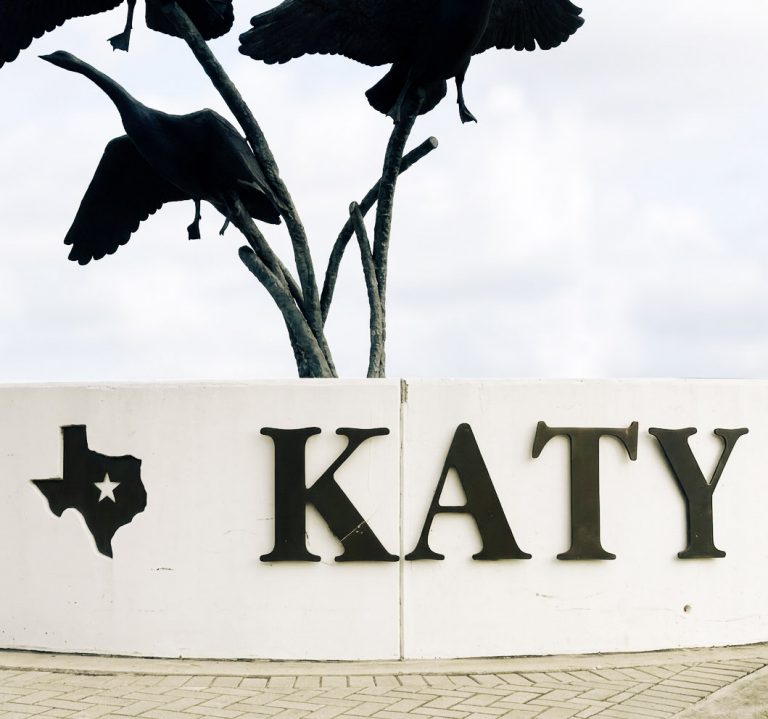
Katy, Fulshear, Cypress and Sugar Land may all appear on the same relocation shortlist.
But they aren’t necessarily at the same stage of development.
In some parts of Greater Houston, you can drive for miles and see the next version of the suburb taking shape in front of you: raw land, new roads, model homes, future retail signs and master-planned communities that may take another decade or more to build out.
Sugar Land is different.
Much of the city you would be buying into already exists.
That’s part of the appeal. It’s also part of the constraint.
The city itself now says redevelopment is necessary as it approaches buildout, and its long-term land-use vision calls for existing areas to evolve through new combinations of housing, retail, offices, entertainment and civic uses. Sugar Land
In other words:
Sugar Land isn’t done growing. It’s changing what “growth” means.
And two places show us what that could look like.
Lake Pointe: What Happens When a Corporate Campus Becomes Housing?
If you’ve driven near Highway 6 and U.S. 59/I-69, you may know the former Fluor corporate campus.
Fluor vacated its more than 1-million-square-foot Lake Pointe office complex in July 2024. But instead of waiting for another major corporation to occupy an enormous suburban office campus—a model the city says has become less viable since the pandemic—Sugar Land had already created a redevelopment district allowing a much broader mix of uses. Sugar Land
That’s where Lake Pointe Green comes in.
Sugar Land City Council approved Houston-based Lovett Group’s concept plan in May 2025. The former 52-acre Fluor site is planned as a walkable residential district with townhomes, cottages and multifamily housing. Demolition of approximately 1 million square feet of the old campus was completed in May 2026, and the project is currently in platting and design. Sugar Land
But here’s the part I’d pay attention to if I were considering a move to Sugar Land:
This isn’t simply a developer squeezing a few houses onto leftover land.
The city approved up to $24.3 million in public support tied to parks and civic space, demolition and environmental remediation, and public infrastructure. The city’s 2025 approval projected roughly 1,000 new residences over 25 years at Lake Pointe Green. Sugar Land
And the surrounding area is already established.
There are trails and parks, a pedestrian bridge connecting residential areas to nearby commercial uses, Whole Foods and other retail, restaurants, medical offices and St. Luke’s Hospital. Sugar Land
That’s very different from buying into a new community where you’re waiting for the grocery store, restaurants and surrounding development to arrive later.
And Lake Pointe isn’t the only housing coming here.
Immediately adjacent to Lake Pointe Green, construction is underway on Pearl Lake Pointe, a five-story, 376-unit multifamily development. Plans include live-work units, commercial office space and a ground-floor café, with completion currently estimated between 2027 and 2028. Sugar Land
Put those projects together and you start seeing what Sugar Land’s next growth model could look like:
less outward expansion, more reinvention of places that already exist.
Imperial Is a Much Bigger Question Mark
Then there’s Imperial.
And this is where I’d be careful about what you read online.
The Imperial Historic District is enormously important to Sugar Land. It includes the nearly century-old Imperial Sugar Char House and represents the city’s origins as a company town.
Imperial Has Tried to Become Something More Before
If you’re new to Sugar Land, there’s an important piece of context here: this isn’t the first attempt to turn the former Imperial Sugar property into something more.
Immediately west of the historic district is Imperial, the larger 720-acre mixed-use master-planned community developed by Johnson Development. The vision combined residential development with office, retail and entertainment uses—more of a live-work-play environment than a traditional suburban subdivision.
Parts of that vision became very real. Homes were built. Constellation Field opened. The Fort Bend Children’s Discovery Center occupies one of the historic buildings. But the historic core surrounding the Char House proved much harder to redevelop.
Multiple private redevelopment efforts failed to fully revive that portion of the property over roughly two decades. In 2025, the City of Sugar Land acquired nearly 40 acres of the historic district and began a new effort to determine what comes next.
That’s important context when you see new plans and renderings for Imperial. Sugar Land isn’t starting with a blank canvas—and this site has had ambitious visions before.
The question now isn’t whether someone can imagine an impressive future for Imperial. It’s whether this new public-private approach can finally turn the historic core into the active district Sugar Land has been trying to create around it for years.
But if you’re relocating here, you need to distinguish between the vision for Imperial and what actually exists today.
The City of Sugar Land acquired nearly 40 acres of the district in June 2025 after multiple private redevelopment attempts over roughly two decades failed to fully bring the site back to life. Sugar Land
The city then held community visioning sessions and formally adopted a vision and guiding principles in February 2026. It is now pursuing a master development partner, with selection anticipated by the end of 2026. Preservation planning for the Char House is also underway. Sugar Land
What will the finished district ultimately look like?
We don’t know yet.
And that’s exactly the kind of distinction I want relocating families to understand.
A rendering is not an amenity.
A proposed restaurant is not a restaurant.
A future mixed-use district is not the same thing as living next to a finished mixed-use district today.
When you’re buying a home based partly on what’s coming around it, the words proposed, approved, under construction and open are not interchangeable.
This Isn’t Just About New Buildings. It’s About Sugar Land’s Tax Base, Too.
Here’s the part of the story that’s easy to miss.
Why does Sugar Land care so much about redevelopment?
It’s not simply because the city wants newer buildings.
As available land disappears, there are fewer opportunities to expand the city’s tax base through traditional new development. Sugar Land explicitly connects redevelopment with maintaining its fiscal strength and continuing to fund the services and amenities residents expect. Sugar Land
That’s one reason Lake Pointe matters so much.
The city’s projections associated with the approved Lake Pointe Green plan estimated more than $38 million in new property-tax revenue over 25 years. Sugar Land
So when you see Sugar Land talking about density, different housing types, redevelopment and mixed-use districts, there’s a larger financial question underneath it:
How does a largely built-out suburb continue generating the economic activity necessary to support itself?
That’s a much more interesting story than “Sugar Land is full.”
But More Density Comes With Questions
Redevelopment isn’t automatically good simply because something new gets built.
It can introduce more housing options, revitalize underused property and create places where homes, restaurants, parks and businesses sit closer together.
It can also introduce legitimate questions about traffic, infrastructure, density and how new development fits beside established neighborhoods.
Sugar Land is already wrestling with those questions.
Its land-use vision specifically anticipates new walkable mixed-use activity centers, while the Lake Pointe planning framework increased the anticipated number of multifamily units within the larger regional activity center. Sugar Land
That’s why I wouldn’t tell a relocating buyer simply:
“Sugar Land is established.”
I’d ask:
Which part of Sugar Land? And what’s happening around the property you’re considering?
Because those two questions could matter considerably over the next five or ten years.
If You’re Moving to Sugar Land, This Changes the Way I’d Help You Shop
This is where a development story becomes a real-estate decision.
If you tell me you want new construction, for example, I’m not going to treat Sugar Land the same way I would a part of Greater Houston where thousands of new single-family homes are still being built across large master-planned communities.
The inventory is different because the city is different.
If you tell me you want an established neighborhood, I also don’t want us looking only at the house.
What’s next to it?
Is that office property likely to remain an office property?
Is nearby vacant land actually vacant—or does it already have an approved plan?
Is the “future town center” something that’s funded and under construction, or something shown on a developer’s marketing map?
What could additional housing nearby mean for the roads you use every day?
And if you’re comparing an older Sugar Land home with a brand-new home farther west, are you comparing only square footage and price—or are you accounting for what already exists around each one?
Those are the questions I care about.
Because the house you’re buying is today’s decision. The community changing around it is the decision you’ll live with.
A Sugar Land Address Doesn’t Tell Me Enough
There’s another reason I wouldn’t make this decision from Zillow and Google Maps alone.
When someone tells me they’re interested in “Sugar Land,” I want to know what they actually mean.
The individual property matters.
The neighborhood matters.
The roads they’ll use matter.
What’s already built around them matters.
What’s planned around them matters.
And their reason for considering Sugar Land in the first place matters.
Someone who wants an established home near existing restaurants, shopping and services may look at Sugar Land very differently from someone whose dream is a brand-new house in a community where everything—from the elementary school to the retail center—is still being built.
Neither person is wrong.
They may simply belong in two completely different parts of Greater Houston.
That’s the difference between finding a house in Houston and figuring out where your life actually works here.
So, Is Sugar Land Really Running Out of Room?
Yes—in the traditional suburban-growth sense.
With less than 4% of its land available for new development, Sugar Land simply doesn’t have the same blank canvas as some of Greater Houston’s expanding outer suburbs. Sugar Land
But I don’t think the more interesting story is that Sugar Land is running out of land.
It’s what Sugar Land is doing because of it.
Lake Pointe is transforming a former corporate campus into housing, parks and a more walkable district.
Imperial could give new life to one of the most historically significant places in the city, although much of that future is still to be determined.
And Sugar Land’s planning policies increasingly acknowledge that the city’s next chapter will require redevelopment, different housing types and more intensive use of some existing land. Sugar Land
For current residents, that’s a story about what their city becomes next.
For someone considering moving here, it’s something else:
It’s information I’d want before deciding which house to buy.
The Relo Guide Take
If Sugar Land is on your Houston shortlist, don’t let “built out” automatically scare you away—and don’t let an established address make you assume nothing around it will change.
Look at the house.
Then zoom out.
Look at the neighborhood, the surrounding land, the roads, the redevelopment plans and what is actually built today versus what’s still coming.
That’s how I approach relocation decisions with my clients, because choosing where to live in Greater Houston isn’t just about finding the best house available this weekend.
It’s about understanding the life you’re buying into.
If you’re still deciding whether Sugar Land belongs on your shortlist, start with The Houston Relo Guide’s Sugar Land Community Guide. And if you’re moving to Greater Houston and want help comparing Sugar Land with the other places on your list, Relo Connect is where we start.